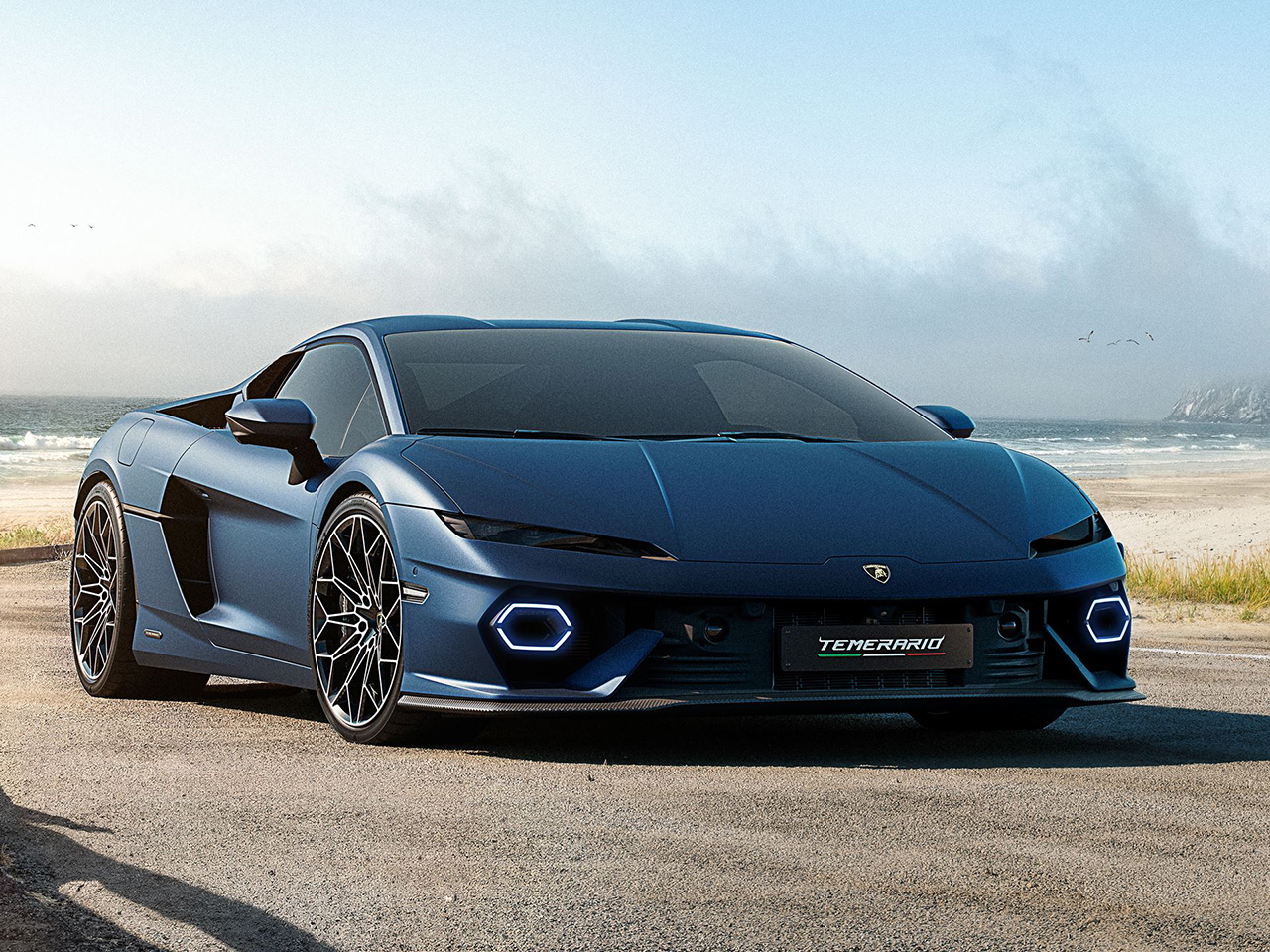
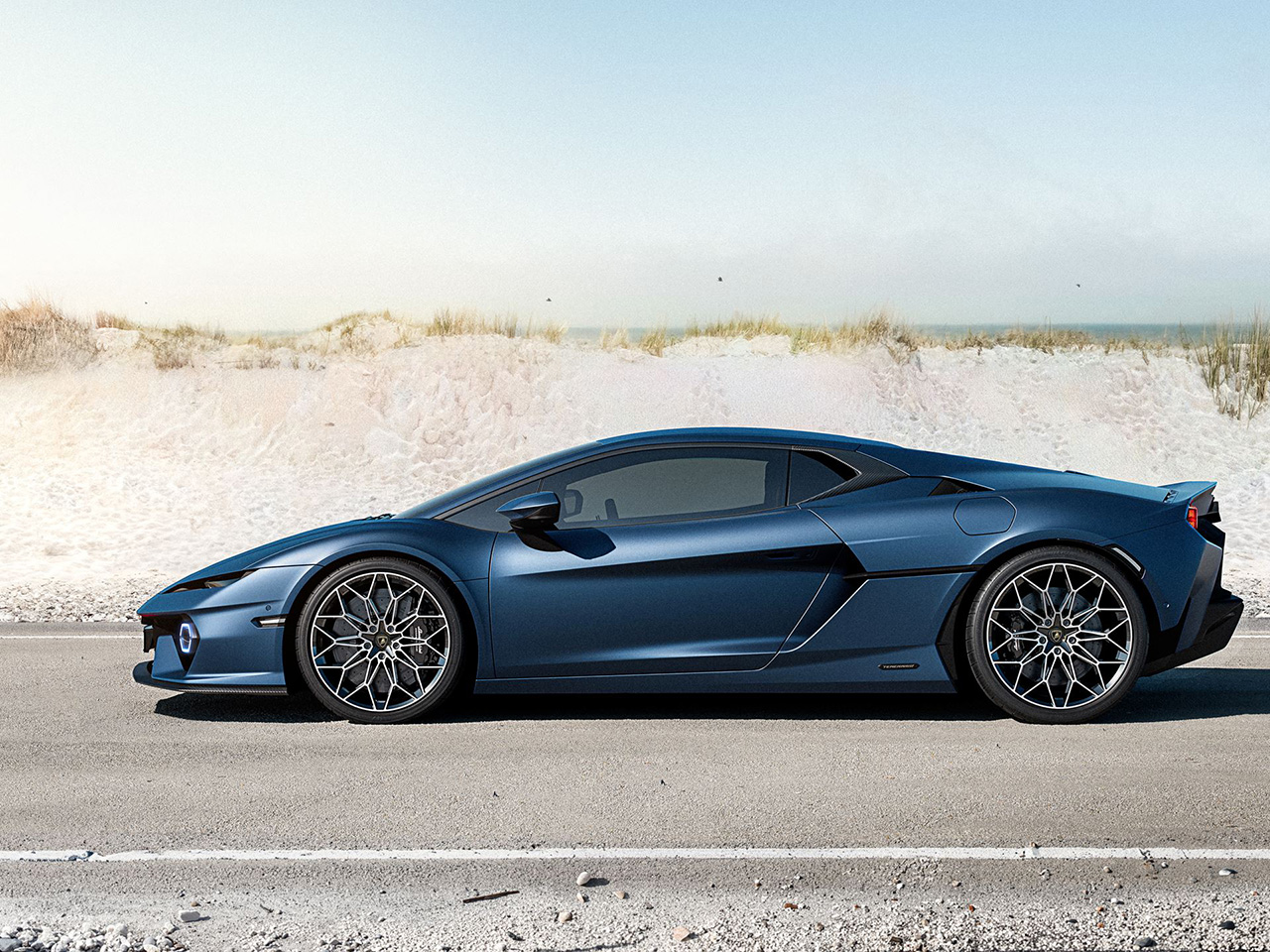
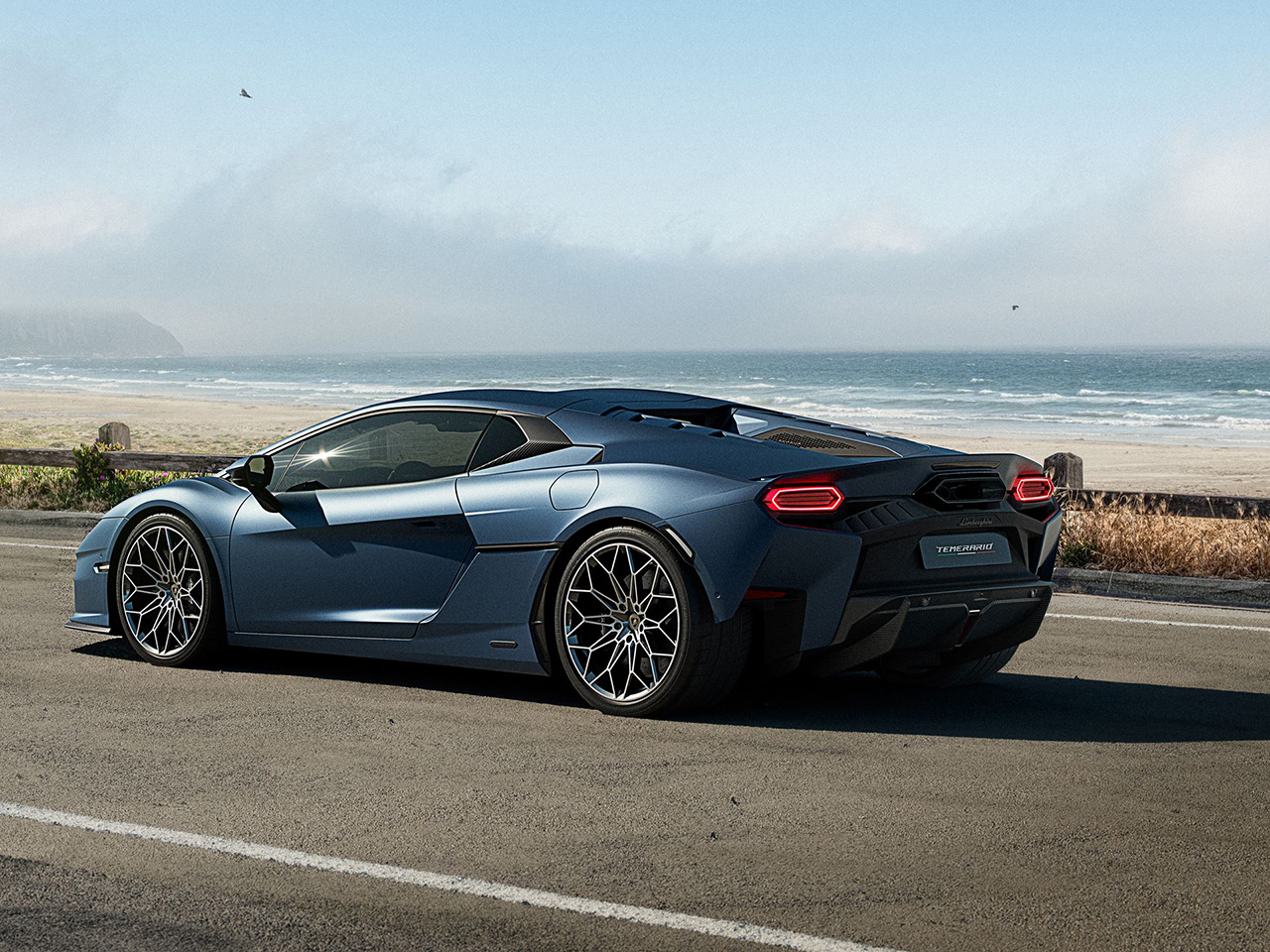
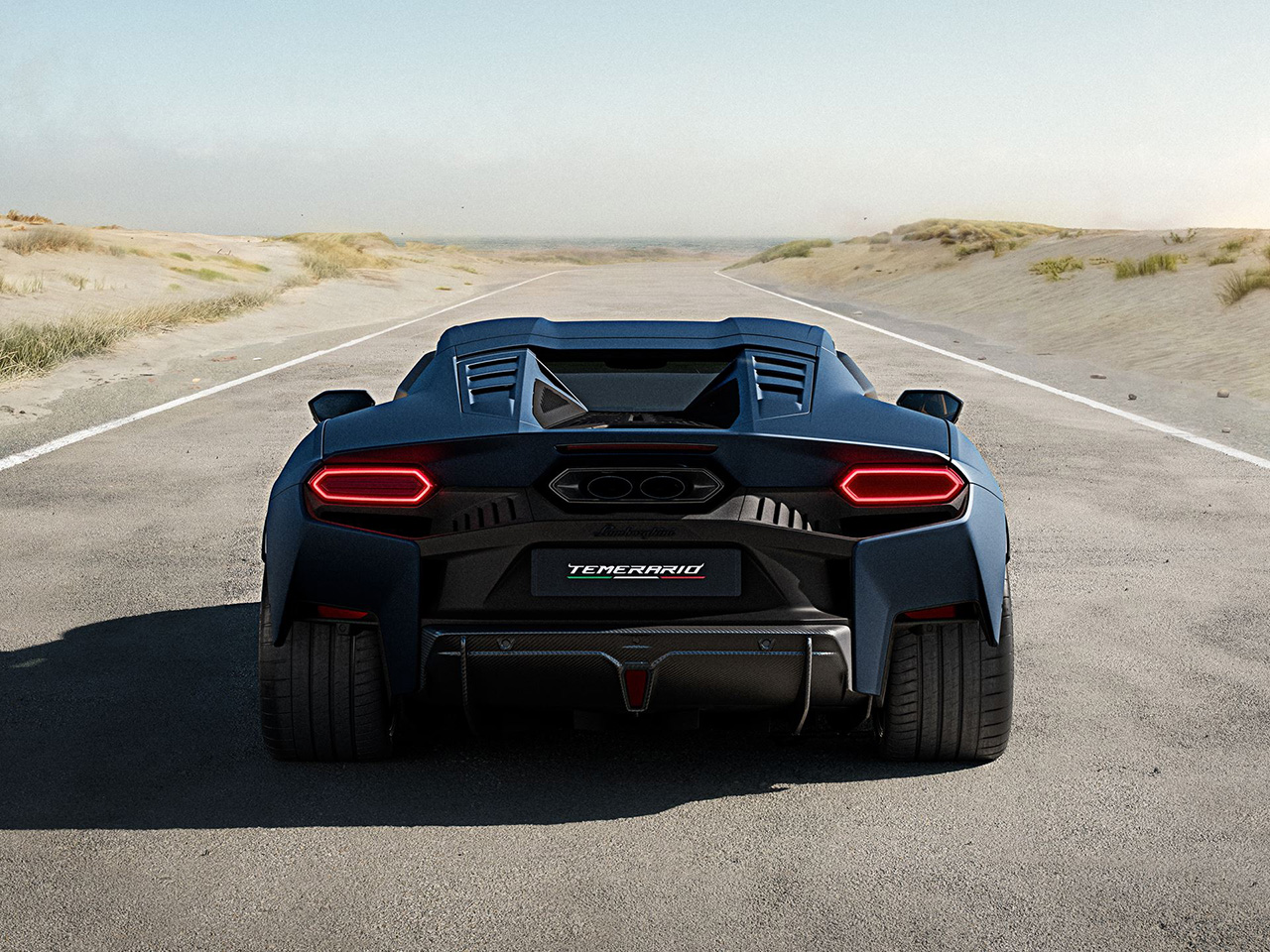
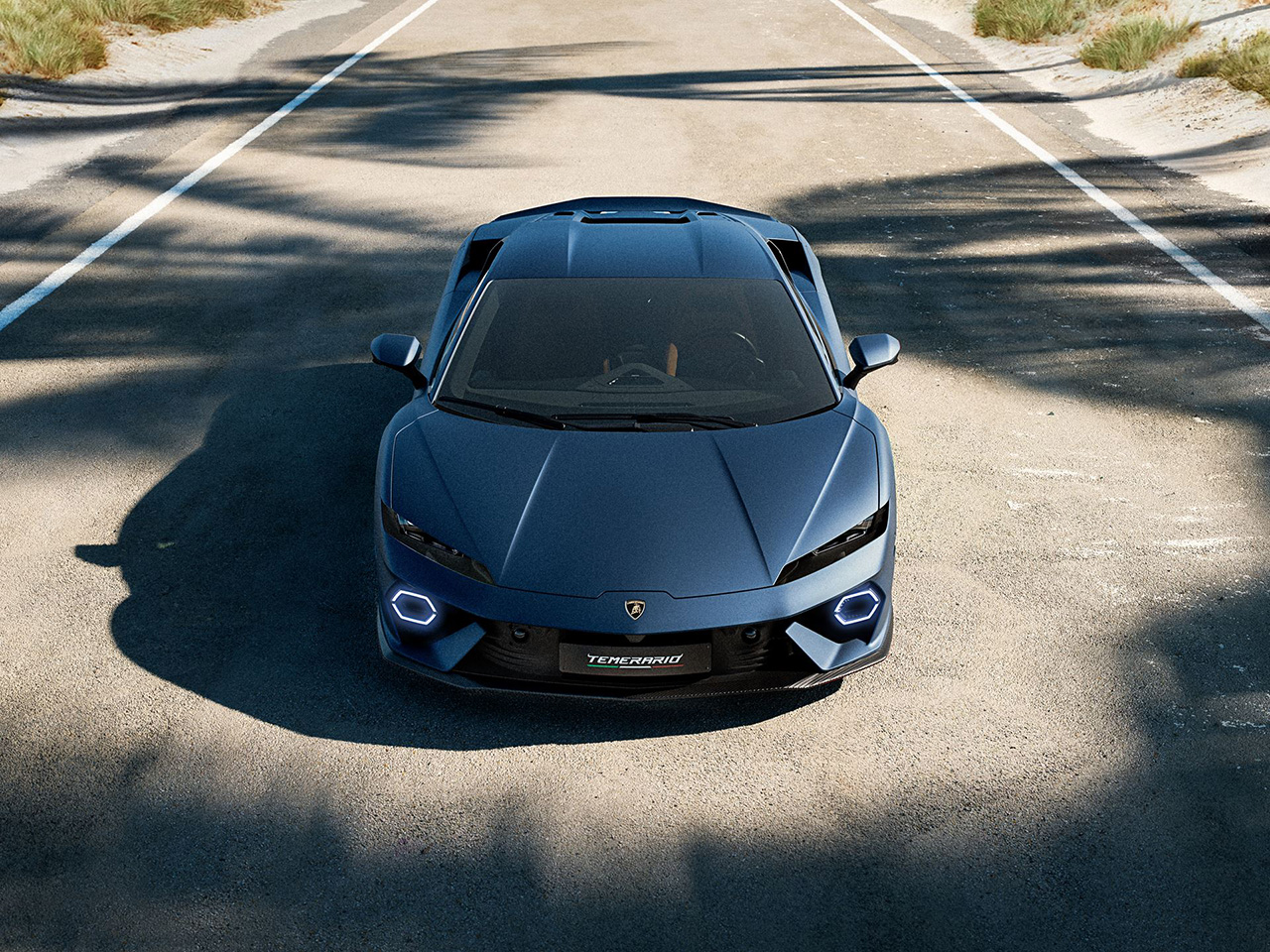
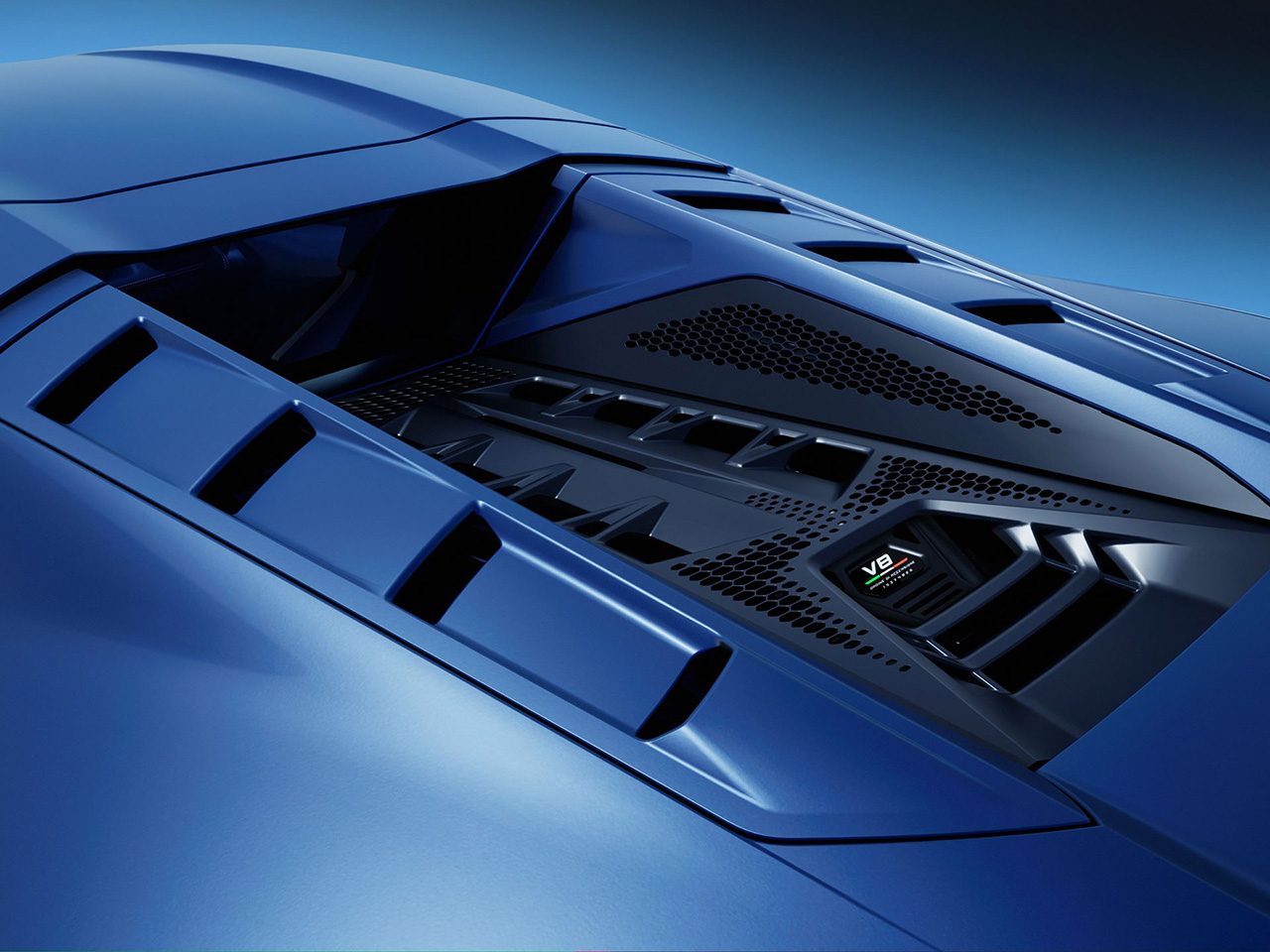
The Temerario is the second model in Lamborghini's High Performance Electrified Vehicle (HPEV) lineup, following the Revuelto. It also marks the full transition of all Lamborghini models into hybrid powertrains, completed after the debut of the Urus SE. The highlight of the Temerario is its brand-new powertrain, which combines a newly developed twin-turbo V8 engine with three electric motors, delivering a total output of 920 horsepower (CV). The V8 engine was entirely designed and developed in Sant’Agata Bolognese and is the only production super sports car engine capable of revving up to 10,000 rpm. Impressive performance figures include a top speed of over 340 km/h (210+ mph) and 0–100 km/h acceleration in just 2.7 seconds.
The Temerario uses a newly developed “Multi-Technology Aluminum Spaceframe” body structure, engineered to handle the high torque and loads generated by the new hybrid system. The frame is made entirely of aluminum, including high-strength aluminum alloy components. Compared to the Huracán, the hybrid system in the Temerario uses over 50% fewer parts and reduces welds by over 80%, resulting in increased structural rigidity and 20% higher torsional stiffness.
Key drivetrain highlights of the Temerario:
-
All-new 4.0-liter twin-turbo V8 engine delivering 200 CV per liter
-
Works in tandem with an oil-cooled axial-flow electric motor positioned at P1 (between the engine and transmission)
-
Two additional electric motors mounted on the front axle for added torque and variable all-wheel-drive control
-
Combined system output of 920 CV
-
Peak engine power of 800 CV at 9,000–9,750 rpm
-
Peak torque of 730 Nm at 4,000–7,000 rpm
-
Redline at 10,000 rpm
-
“Hot V8” turbo layout within the engine’s V for improved cooling and compactness
-
Max turbo boost at 2.5 bar, controlled by electric valves and wheel-speed sensors
-
Newly designed cylindrical airbox for compact efficiency
-
Flat-plane 180-degree crankshaft for balanced firing and signature sound
-
Titanium connecting rods for reduced rotating mass and increased strength
-
Engine block made from A357+Cu alloy, as used in motorsport
-
DLC-coated finger follower valvetrain supports revs up to 11,000 rpm
-
3D-printed cooling channels in the cylinder head for even cooling and knock resistance
-
350-bar high-pressure fuel injection system for fine atomization and clean combustion
-
Water and oil pumps aligned on one side to reduce engine height and lower the car’s center of gravity
-
Integrated dry-sump oil tank with a 5-stage system, helping lower the engine profile
-
Fully redesigned cooling system to maintain consistent thermal balance
Each electric motor generates 110 kW (150 PS). Two oil-cooled axial-flow motors drive the front wheels when needed, enabling all-wheel drive. The combined output of the front motors is 220 kW and up to 2,150 Nm of torque. The electric front axle weighs just 73 kg, and each motor weighs only 15.5 kg. The main electric motor is integrated directly within the V8 twin-turbo engine, without a clutch, helping to eliminate turbo lag. The entire electric drivetrain is compactly positioned between the combustion engine and dual-clutch transmission. This motor also serves as a starter and a three-phase generator.
The Lamborghini Temerario comes equipped with a high-performance lithium-ion battery rated at 4,500 W/kg, mounted centrally in the car’s tunnel to maintain a low center of gravity and optimal weight distribution. The battery is protected by a structural bottom layer and connects to the front motors, rear motor, and onboard charging unit. Measuring 1,550 mm (length) × 301 mm (height) × 240 mm (width), the battery uses pouch cells with a capacity of 3.8 kWh. It can be recharged via standard household outlets or charging stations up to 7 kW, taking just 30 minutes for a full charge. Regenerative braking from the front wheels or V8 engine also recharges the battery.
The Temerario features a newly developed 8-speed transversal dual-clutch automatic transmission (DCT) mounted behind the engine. Designed to be compact and lightweight, this new DCT uses a hollow shaft to allow shared synchronizers across multiple torque paths, without additional electrical components. It is lighter and shifts faster than the 7-speed DCT in the Huracán. The dimensions are 560 mm (L) × 750 mm (W) × 580 mm (H).
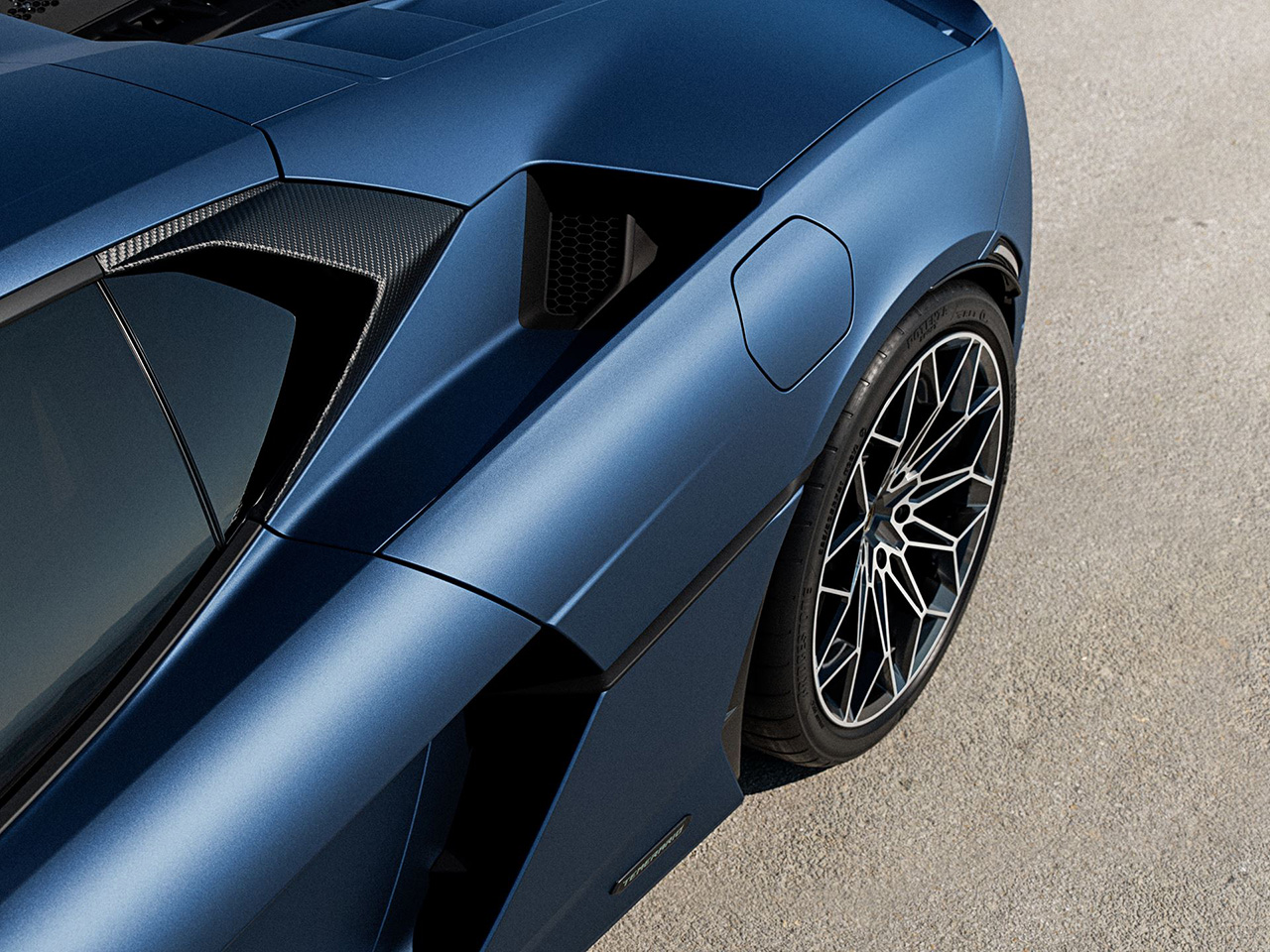
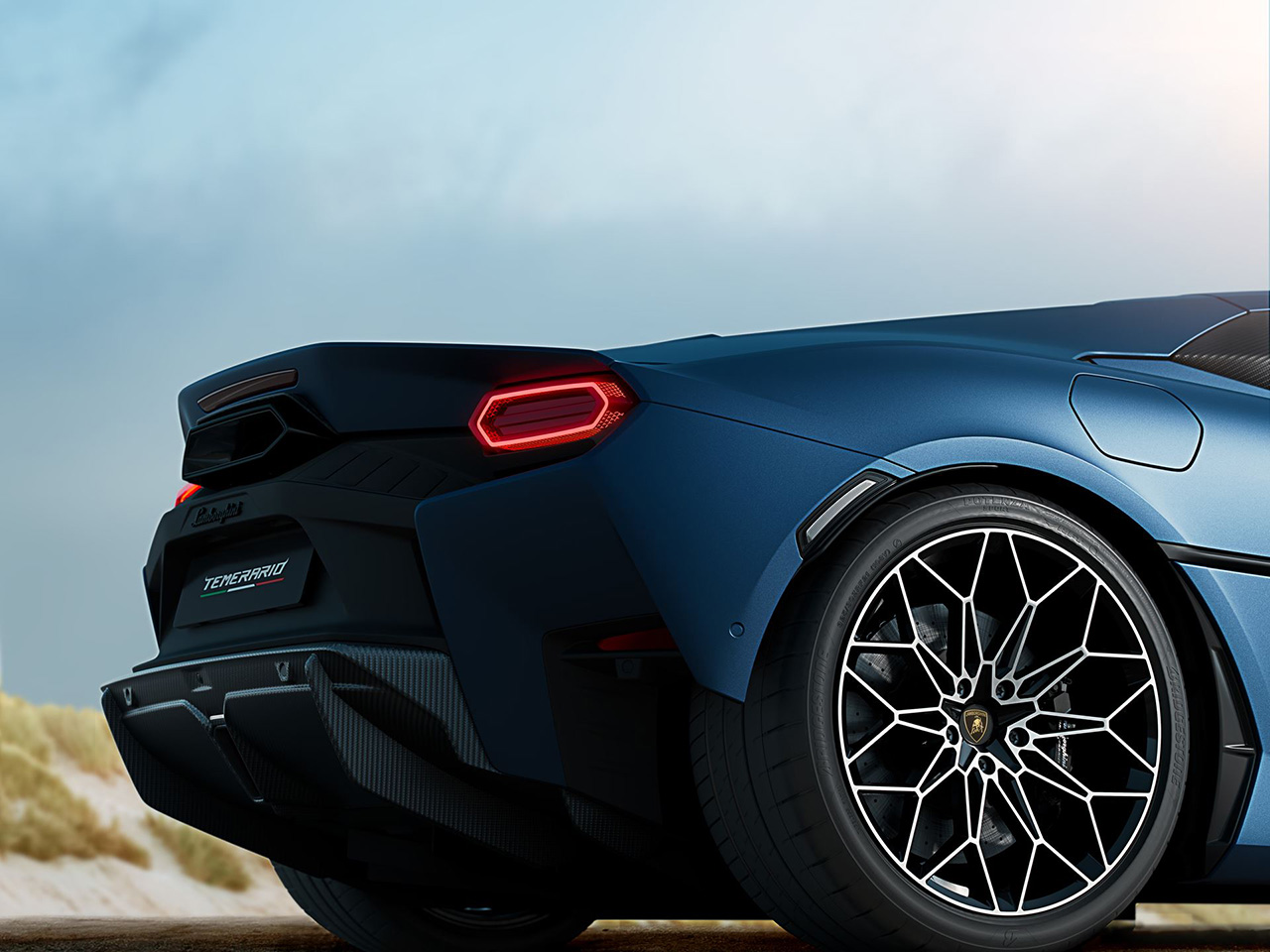
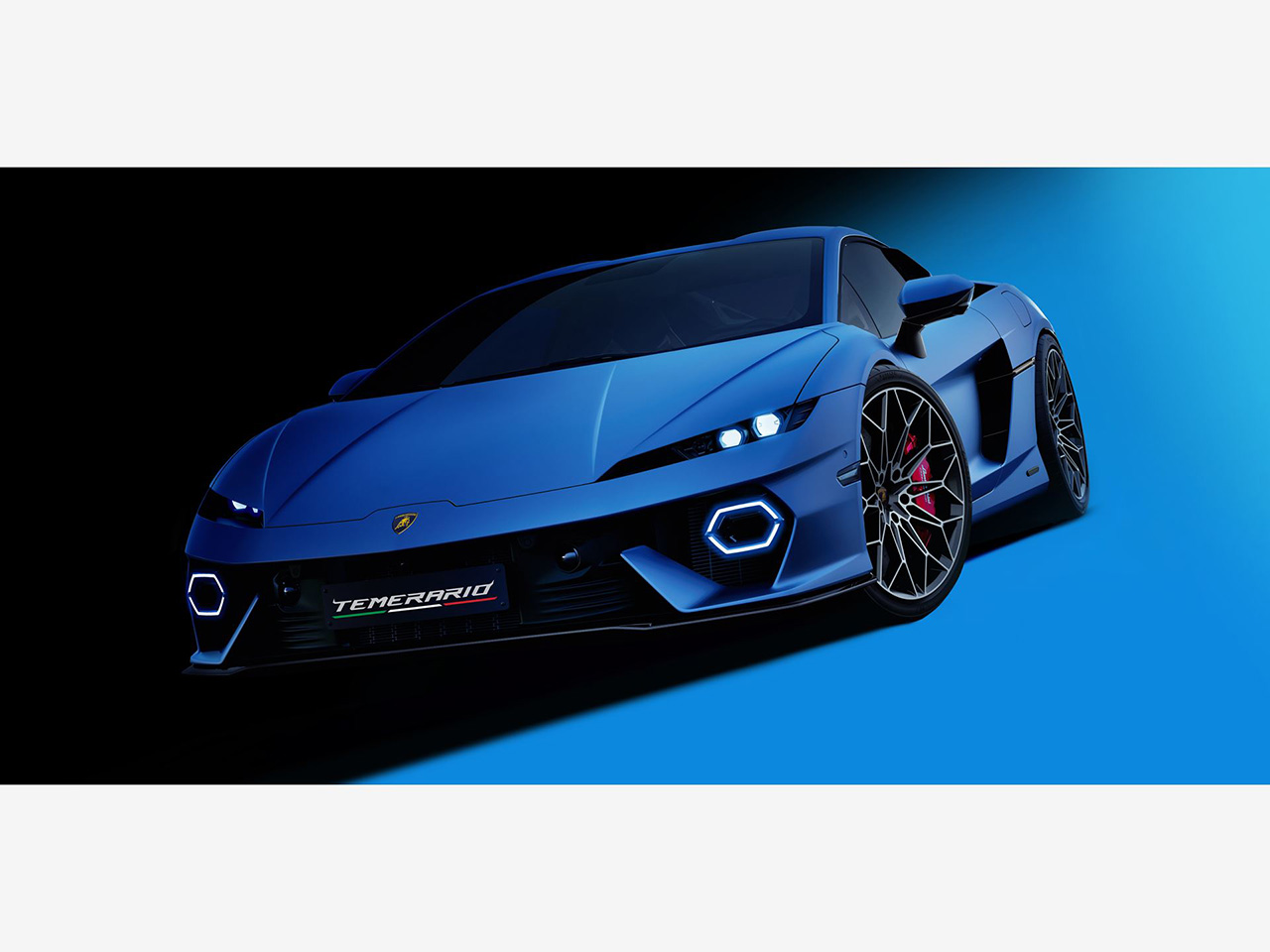
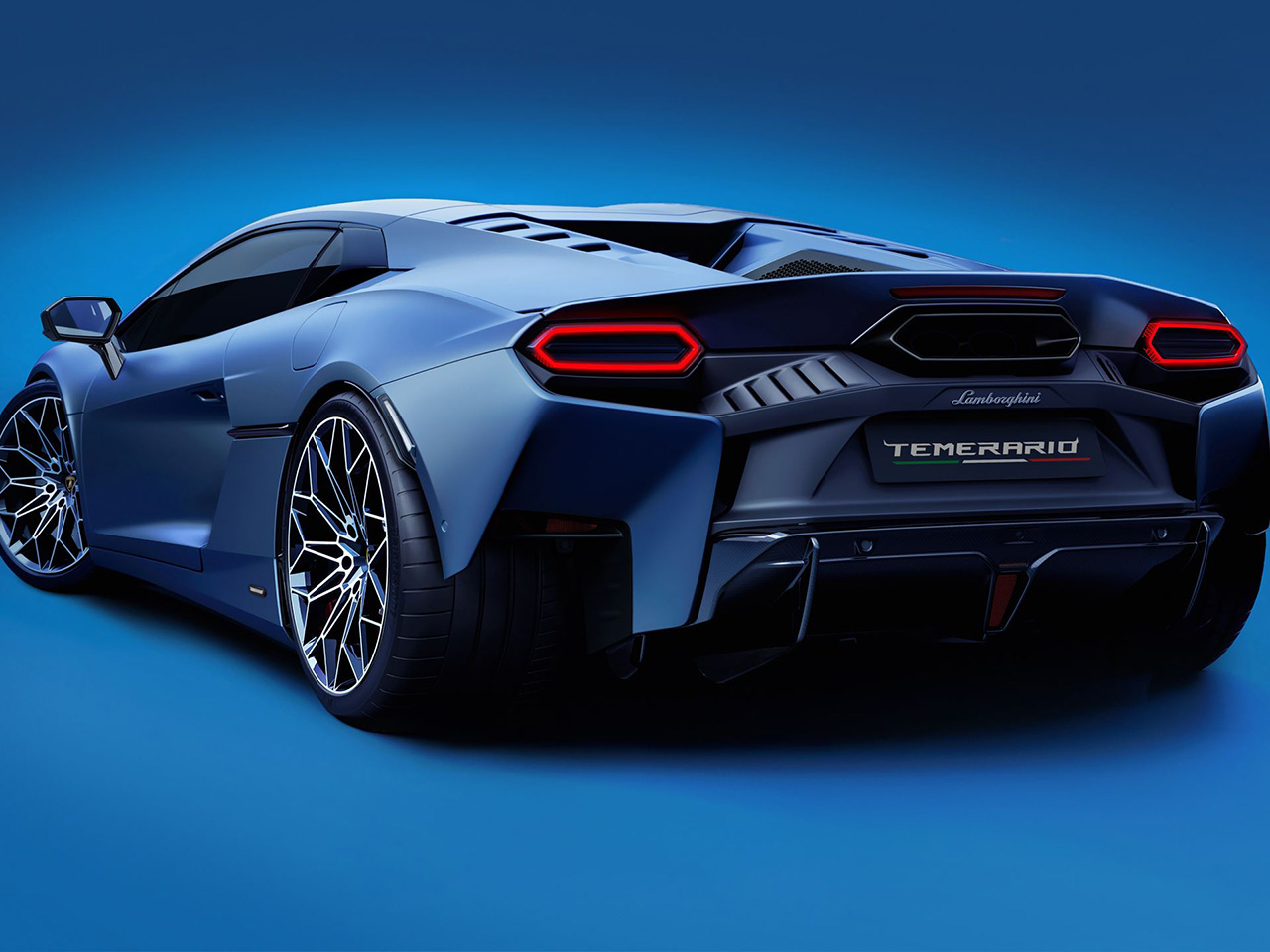
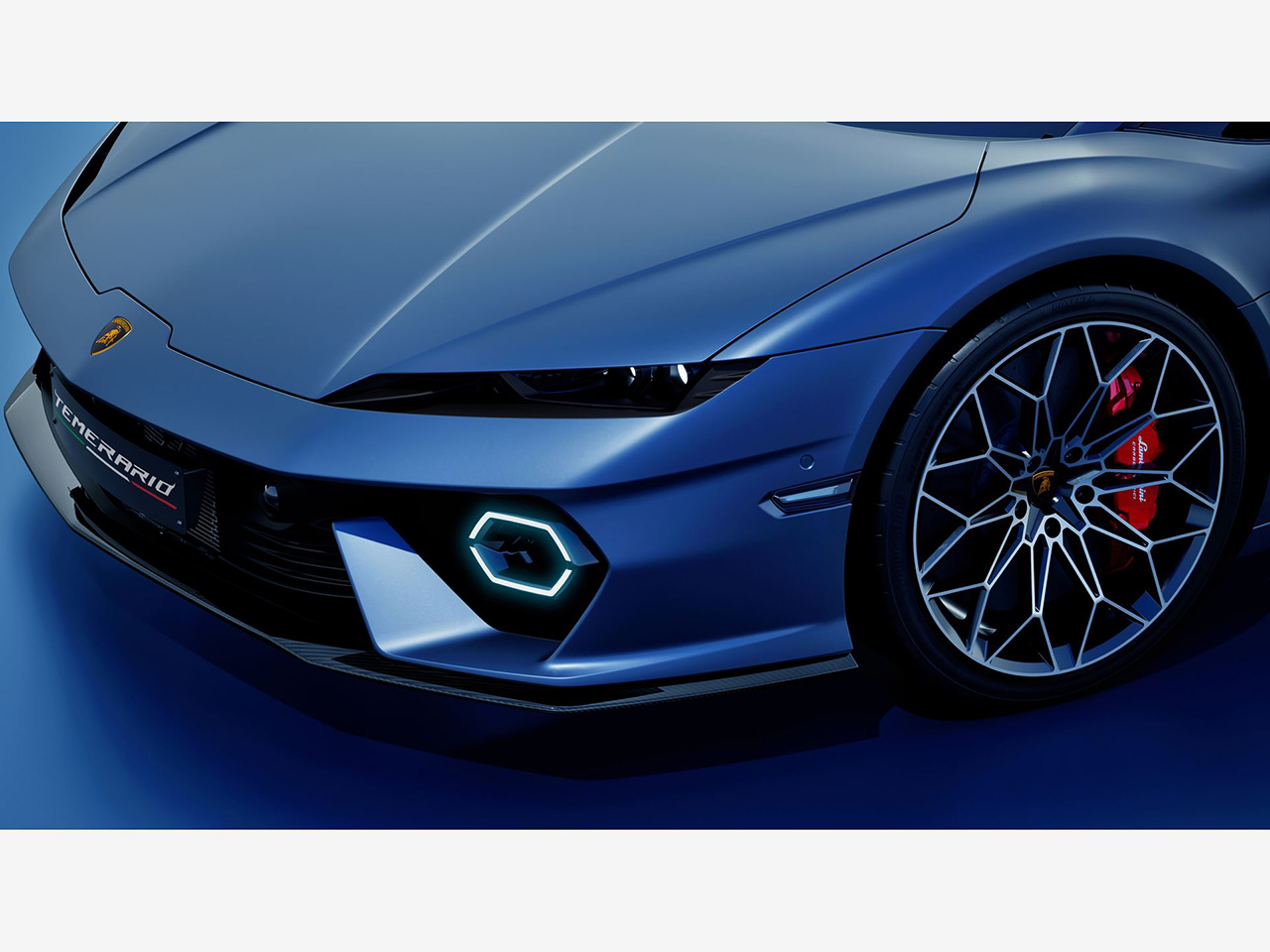
The car’s design features sharp, clean lines, short proportions, and a bold shark-nose front. A new hexagonal-shaped daytime running light (DRL) design gives it a distinct identity, with hexagonal themes also found in the body panels, side air intakes, taillights, and exhaust tips. The rear-sloping roof directs airflow precisely onto the rear wing. Behind the cabin, integrated air inlets above the rear wheel arches feed air to the engine, radiators, and turbochargers.
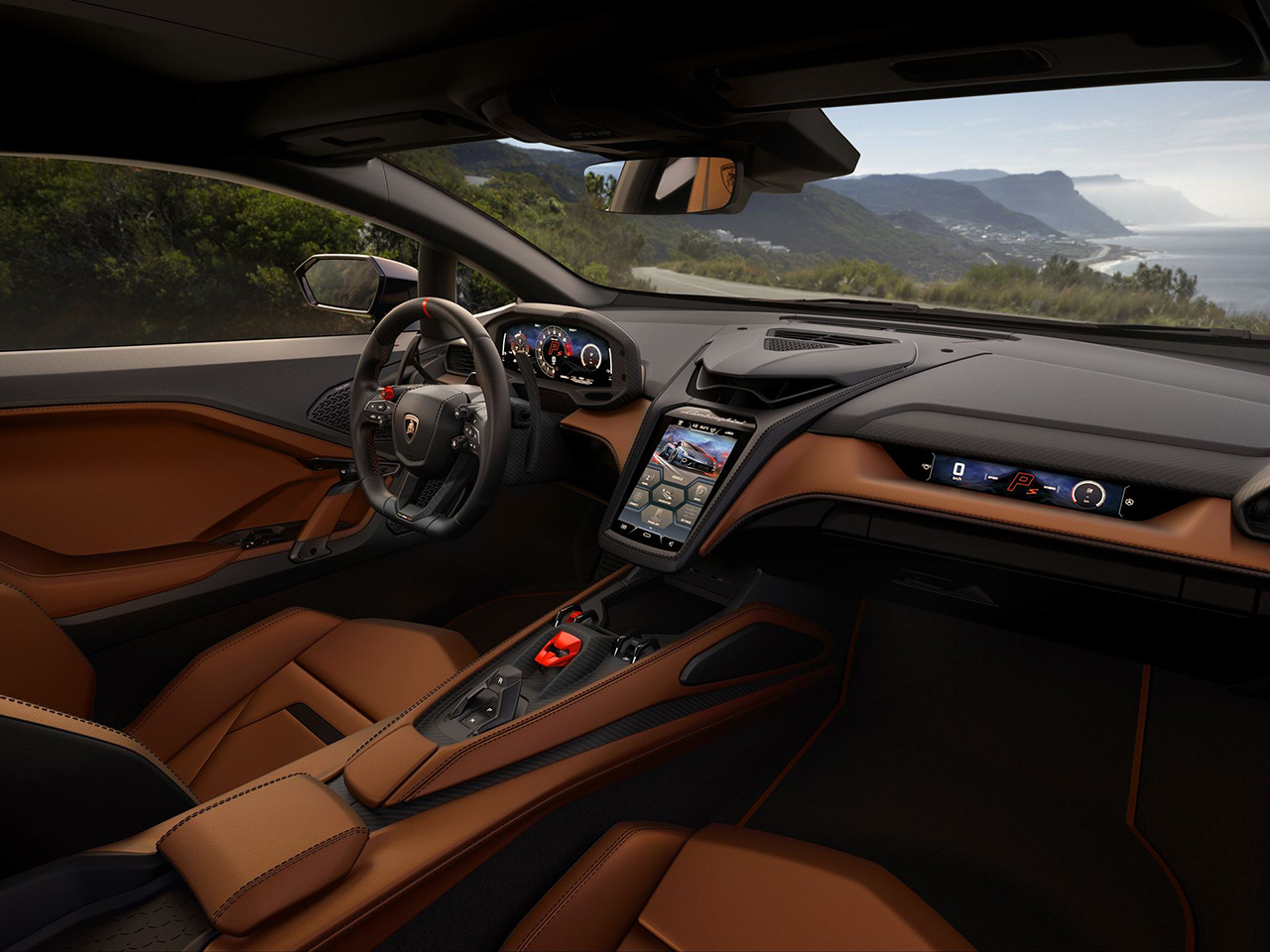
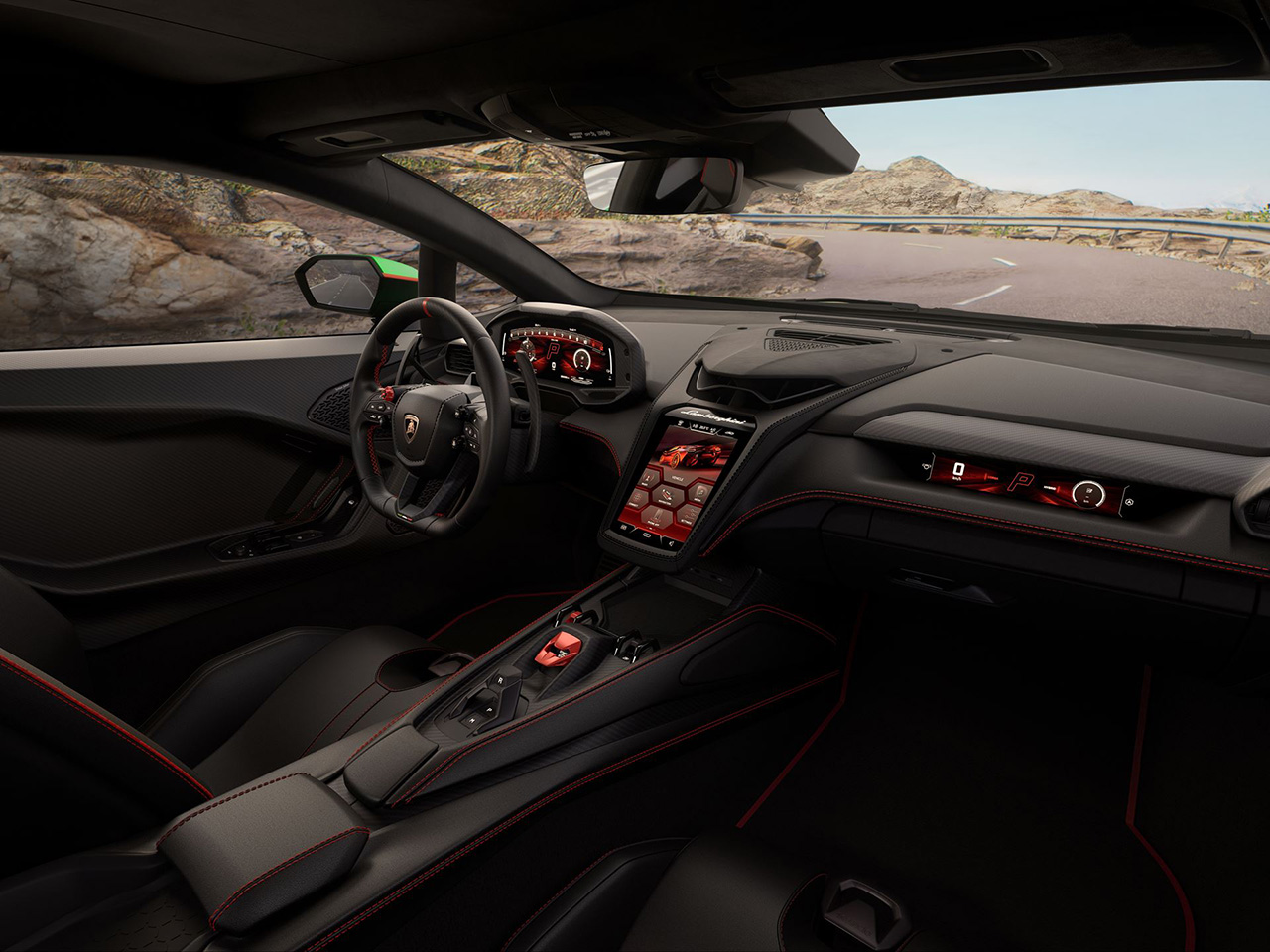
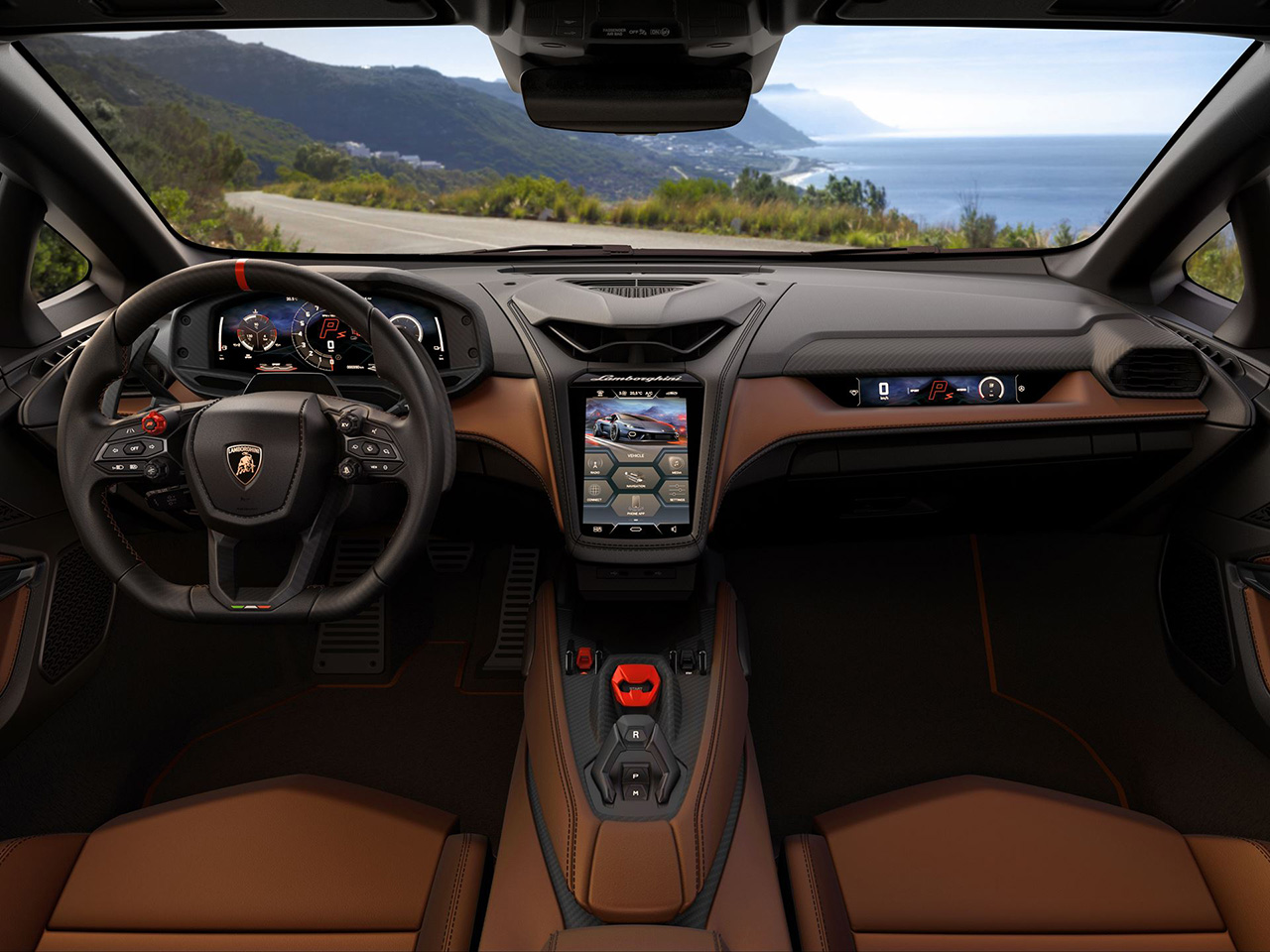
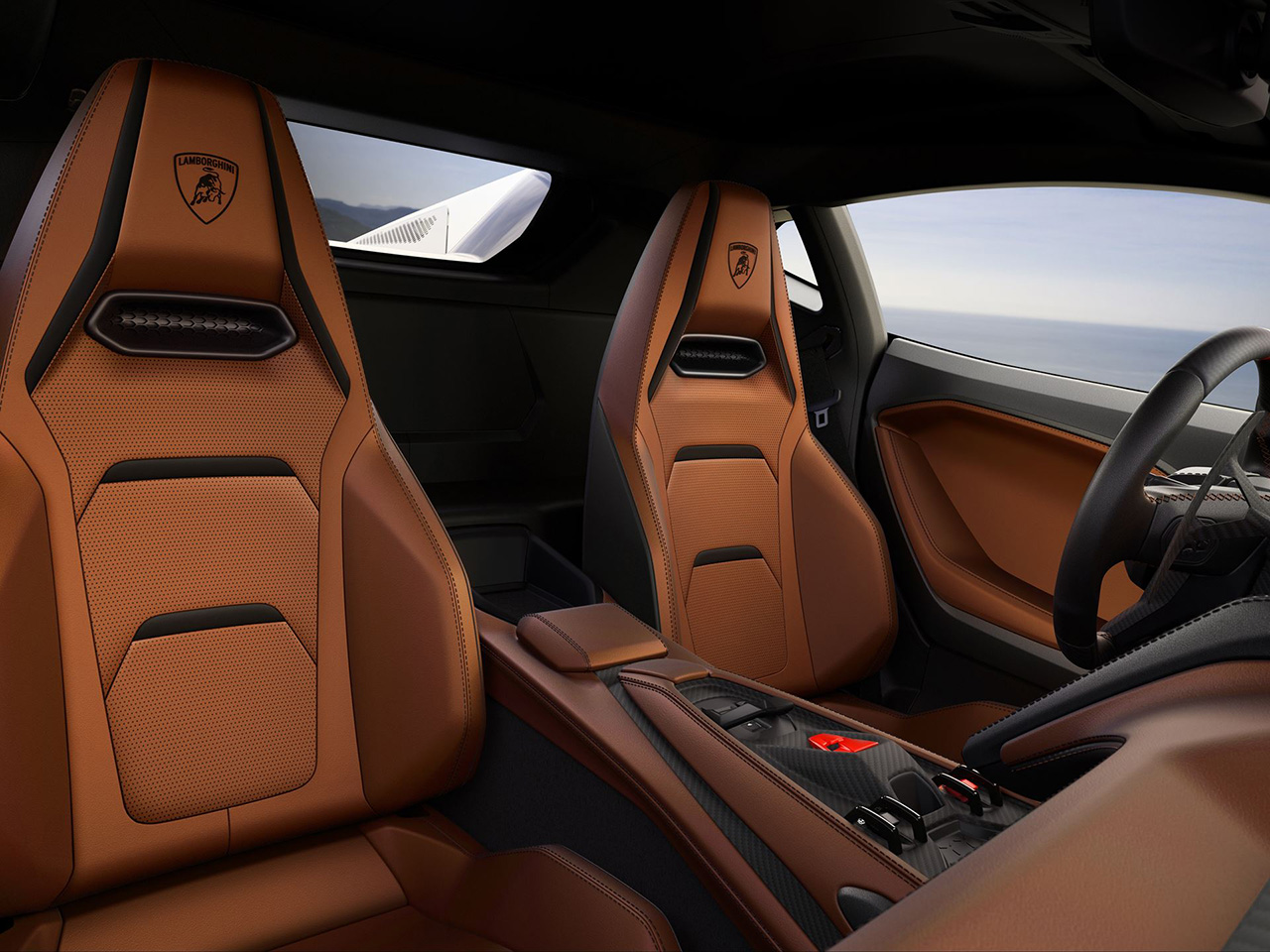
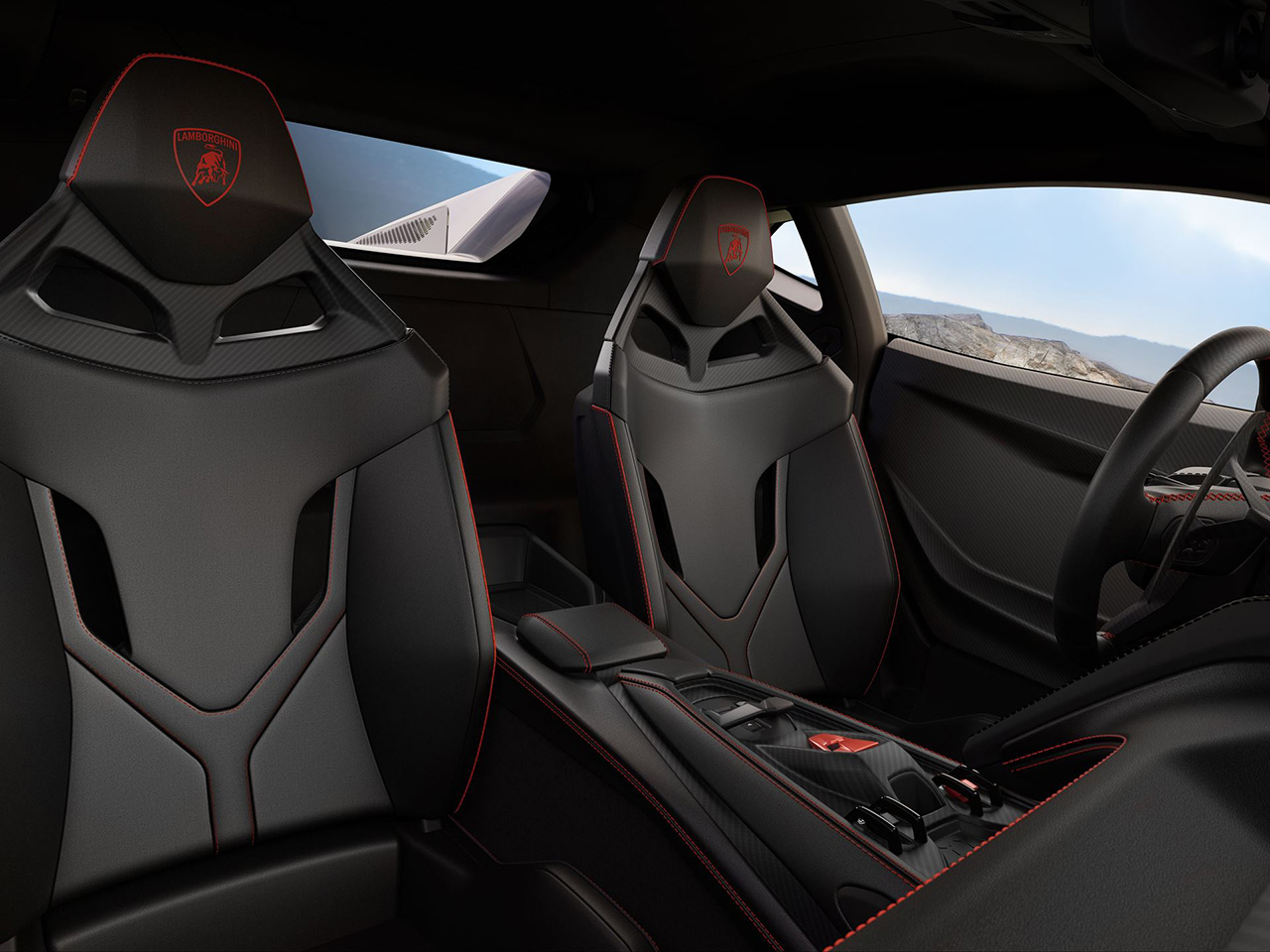
The interior is finished in premium materials such as carbon fiber, genuine leather, and Corsatex suede by Dinamica. Many interior components—including the center console, air vents, door panels, dashboard, steering wheel, and column—can be specified in carbon fiber. Lamborghini's signature design elements remain, including an aviation-inspired Start/Stop power button, the e-gear selector, and a red line-up indicator on the steering wheel. The newly designed steering wheel integrates all major driving functions, including a red-crowned rotor for driving mode selection on the left, along with buttons for the lift system, race start, and turn signals.