












Nissan Motor Co., Ltd. is implementing immediate measures to turnaround its performance and create a leaner, more resilient business capable of swiftly adapting to changes in the market. Today, Nissan shared additional details regarding these actions, outlining targets for fiscal year 2026 and key initiatives.
Nissan president and CEO Makoto Uchida remarked: "Nissan is fully committed to its turnaround actions, aiming to reduce costs by around 400 billion yen. We are dedicated to achieving a more efficient cost structure while driving top-line growth through enhanced competitive products that cater to the diverse needs of our customers. We are executing our turnaround—centered on efficiency and growth—with pace and purpose."
Target for fiscal year 2026
Nissan plans to optimize its cost structure and reduce fixed and variable costs by a total of approximately 400 billion yen in fiscal year 2026, which will reduce its break-even point in the automotive business in fiscal year 2026 from 3.1 million units to 2.5 million units. This will enable a stable operating margin of 4%.
Targeting >300 billion yen fixed cost reduction
In terms of fixed costs, savings of approximately 200 billion yen are targeted from selling, general, and administrative expenses (SG&A), about 100 billion yen from restructuring the manufacturing base, and around 30 billion yen from development efficiencies.
Nissan plans to reduce 2,500 global indirect employees by streamlining operations, implementing hiring reductions, and accelerating voluntary separation programs. Nissan will achieve reductions in unit labor costs with additional measures including expansion of shared service centers by 1,000 positions and prioritized fixed marketing expenses.
Nissan aims to achieve approximately 100 billion yen in savings by consolidating production lines, adjusting shift patterns, and transferring jobs, starting with three plants in Q1 FY25: Smyrna and Canton plants in the U.S., and in Thailand. This rightsizing will reduce headcount in vehicle and powertrain plants by 5,300 in FY25 and 1,200 in FY26, contributing to a total reduction of 6,500. These production savings will be complemented by new engineering and operational efficiencies, including in the launch of new models and in reducing CAPEX and costs for product introductions.
In terms of restructuring its manufacturing base, Nissan plans to reduce its global production capacity by 20% and optimize its manufacturing workforce by fiscal year 2026. This includes a capacity reduction already implemented in China from 1.5 million units to 1 million units. It will combine with ongoing efforts that will reduce capacity from 3.5 million units to 3 million units for plants outside China and increase the plant utilization ratio from 70% in fiscal year 2024 to 85% in fiscal year 2026. In total, including plants in China, Nissan is aiming to reduce global production capacity from the current 5 million units to 4 million units by fiscal year 2026.
Nissan targets an approximately 30-billion-yen cost reduction through improved development efficiency. The family development concept will shorten time-to-market and reduce development costs, achieving about 20 billion yen in efficiencies. The integrated approach will be applied to ongoing projects, with the benefits realized from 2025 onwards. The first model utilizing this process is set to launch in fiscal year 2026.
100 billion yen in variable cost saving
Nissan aims to reduce design-driven costs by an approximate 60 billion yen, starting with the simplification of design (adjusting model performance and content) across its six major global products. Various initiatives for manufacturing operational cost reductions include reducing parts complexity by up to 70%, improving production planning to eliminate supply chain inefficiencies and lower warehouse costs, and enhancing efficiency while reducing costs in after-sales parts warehousing. Through these combined efforts, Nissan targets a total cost reduction of around 100 billion yen.
Driving topline growth
To ensure revenue growth, Nissan will provide a suite of products equipped with differentiated technologies tailored to global customer needs.
In FY24, Nissan refreshed its model lineup, offering a range of differentiated products such as the Qashqai, Juke, Kicks, Armada, Note, Patrol, Magnite, QX80, and Murano. Each model has been renewed to maximize customer value and is essential for delivering profitable volume aligned with distinct market demands.
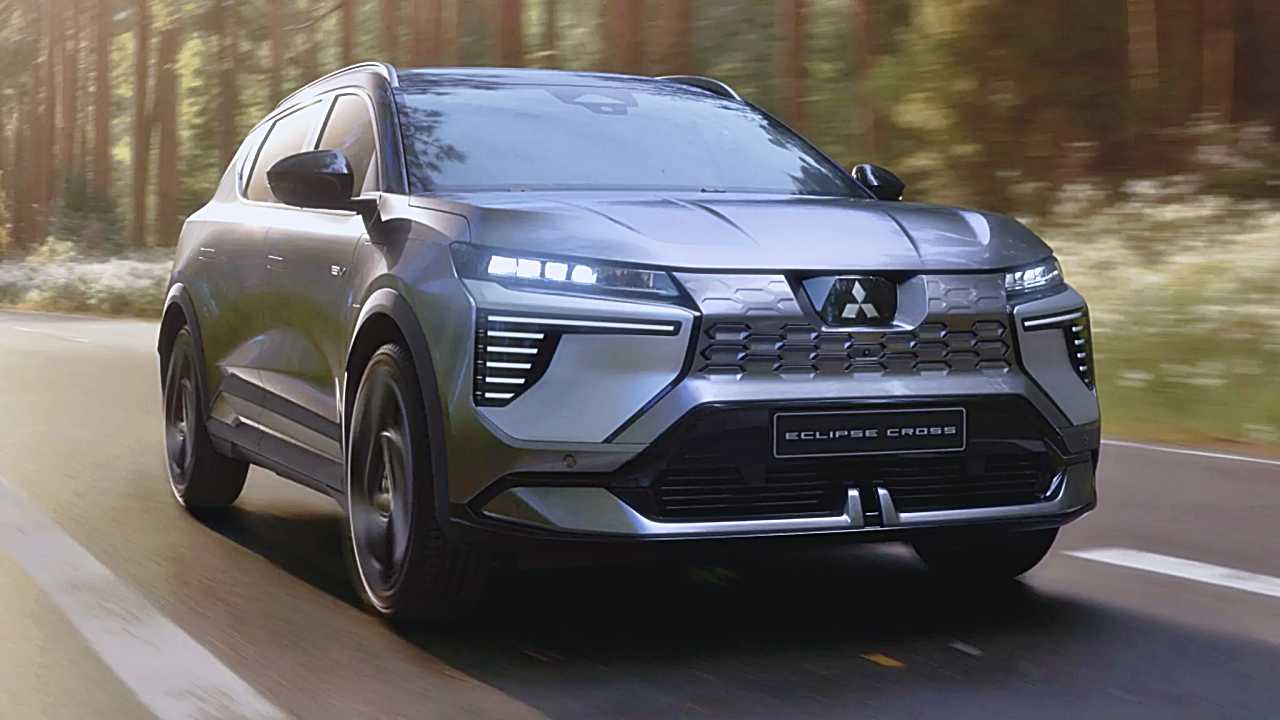
To further enhance its offerings, the company will introduce new plug-in hybrid models in FY25 and FY26, and refresh its award-winning minivehicles and large minivans. Nissan will also strengthen its zero-emission EV lineup with the new LEAF, an all-new compact EV, and a new NEV targeted at the Chinese market.
The contribution to sustainable profitable growth is exemplified by third-generation e-POWER models. The third generation offers significant improvements, including 20% improved fuel efficiency and 20% reduction in cost compared to the first generation. In particular, fuel efficiency at high speeds has been improved by 15% compared to the second generation, achieving top-class fuel efficiency in Europe and significant improvement in the U.S.
Nissan's future profitability will also depend on technical innovation, with an increased focus on intelligent vehicles. Unique intelligent cockpits and driver assistance features will be introduced in models planned for launch by fiscal year 2026. In the coming years, Nissan aims to democratize door-to-door autonomous driving and offer driverless mobility services in Japan with plans for commercialization by fiscal year 2027.
This combination of new model launches, market expansions, and strategic initiatives will drive top-line growth in fiscal years 2025 and 2026, with a plan for volume sales increases through model replacements and expansion into new segments.
Streamline organization and processes
To enhance decision-making speed, Nissan's top management will adopt a single-layer, non-officer framework, reducing top management positions by 20% and creating advancement opportunities for the next generation within a streamlined, borderless organization.
The company will also simplify organizational layers and expand the span of control to improve decision-making efficiency. Additionally, roles and management positions will be evaluated and reclassified in alignment with business objectives under a new unified global system. By establishing clear roles and responsibilities between global and regional functions, Nissan aims to create a leaner global headquarters with centralized upstream functions and decentralized downstream functions, empowering regions to enhance operational efficiencies.
Business and portfolio restructuring; asset optimization
By seizing every possible measure for improvement, Nissan will build on its current measures to proactively advance the next phase of its restructuring. Nissan will carry out a review of its market presence and determine where to remain, outlining an operational strategy for the rest of the markets. The company will also optimize core products, platforms and powertrains to prioritize and streamline investments. Meanwhile, Nissan will accelerate collaborative projects with its Alliance partners, Honda, and other partners.
In the area of asset optimization, Nissan will rigorously evaluate its assets to uncover opportunities for substantial cost reductions and efficiency enhancements.
Conduct strategic review to actively explore new partnerships
Nissan will conduct a strategic review in pursuit of partnership opportunities with the potential to significantly enhance Nissan’s corporate value.
Nissan has already begun implementing the initiatives mentioned above and plans to provide further updates within a month.