






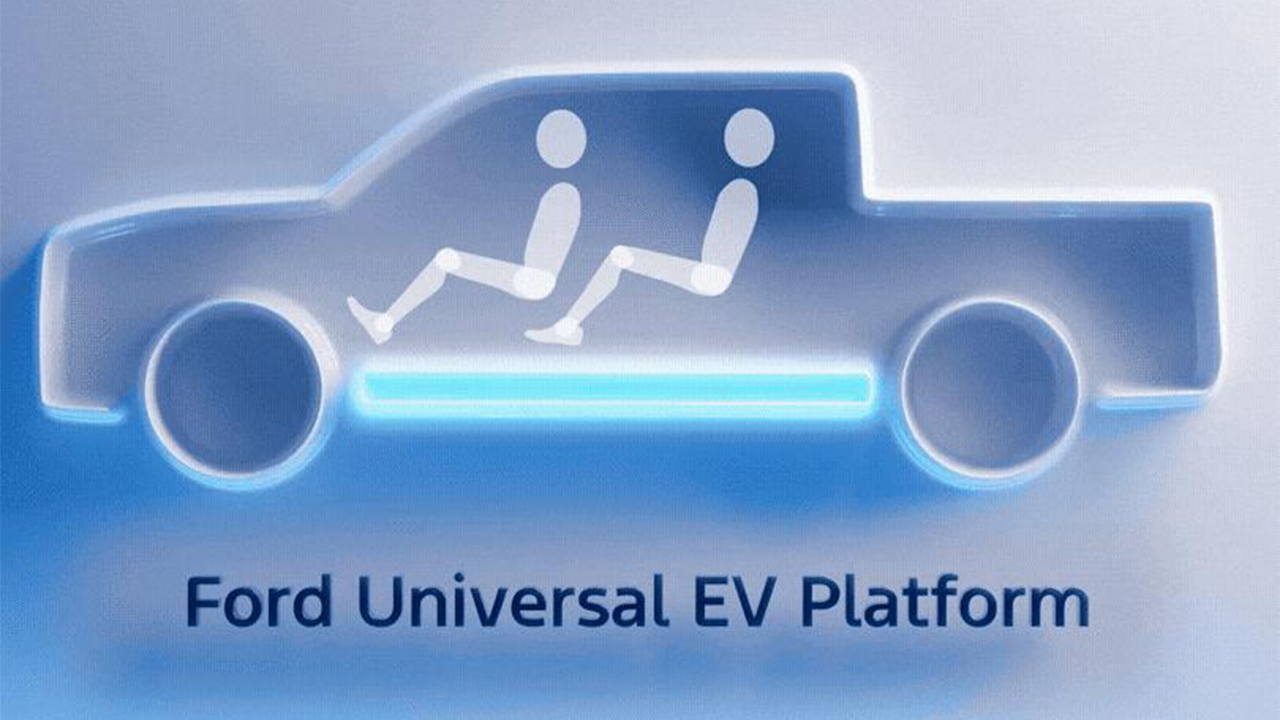
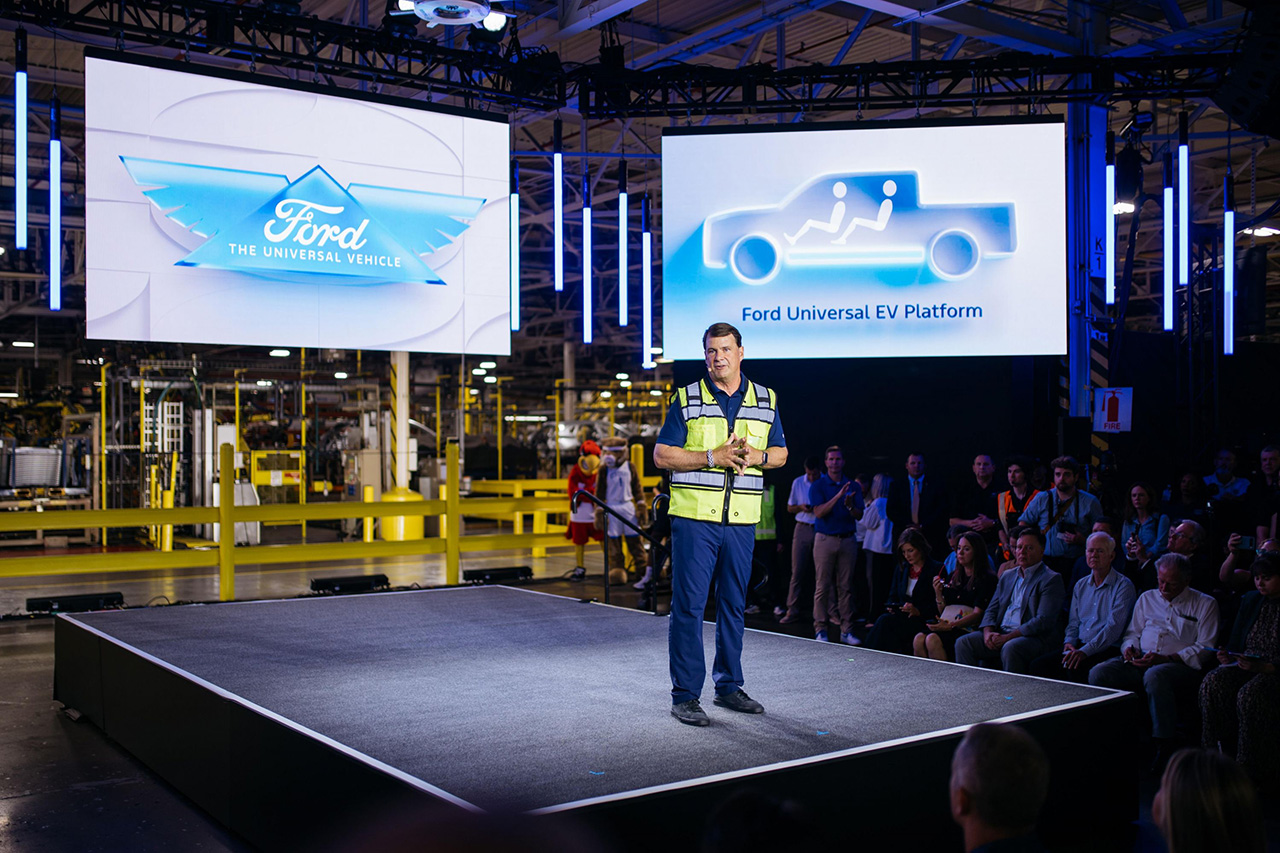
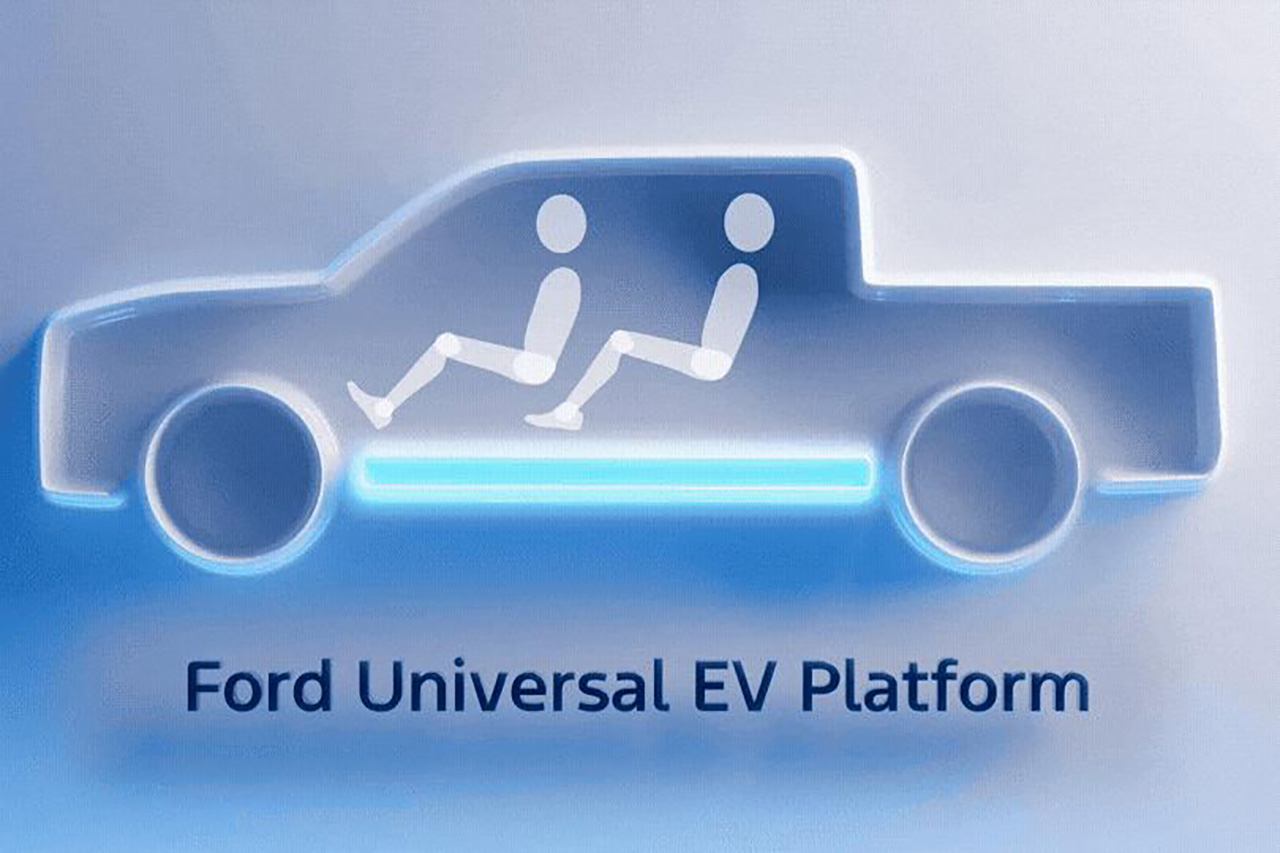
Ford has unveiled a new electric vehicle (EV) platform called the Ford Universal EV Platform, declaring it a “reinvention of vehicle assembly.”
The first model to use this platform will be a midsize, dual-cab electric pickup (similar in size to the Ford Ranger), produced in the United States and set to debut in 2027. It will be sold domestically and exported to yet-to-be-disclosed international markets, with a target U.S. starting price of around US$30,000 (approximately THB 969,000).
In terms of performance, Ford says the new pickup will be as quick as a Mustang EcoBoost, accelerating from 0–100 km/h in 4.9 seconds, with greater downforce and more passenger space than the 2025 Toyota RAV4. It will feature a rear bed with smart storage solutions, a frunk (front trunk), and the ability to lock gear without the need for roof racks or hitch-mounted carriers.
While its design and name have not yet been revealed, Ford has recently trademarked the Ranchero name, previously used on its pickups. Additional details such as the official launch date, driving range, battery capacity, and charging times will be announced later. Ford promises the new model will offer a long driving range, DC fast charging, and Vehicle-to-Load (VtoL) capability for up to six days.
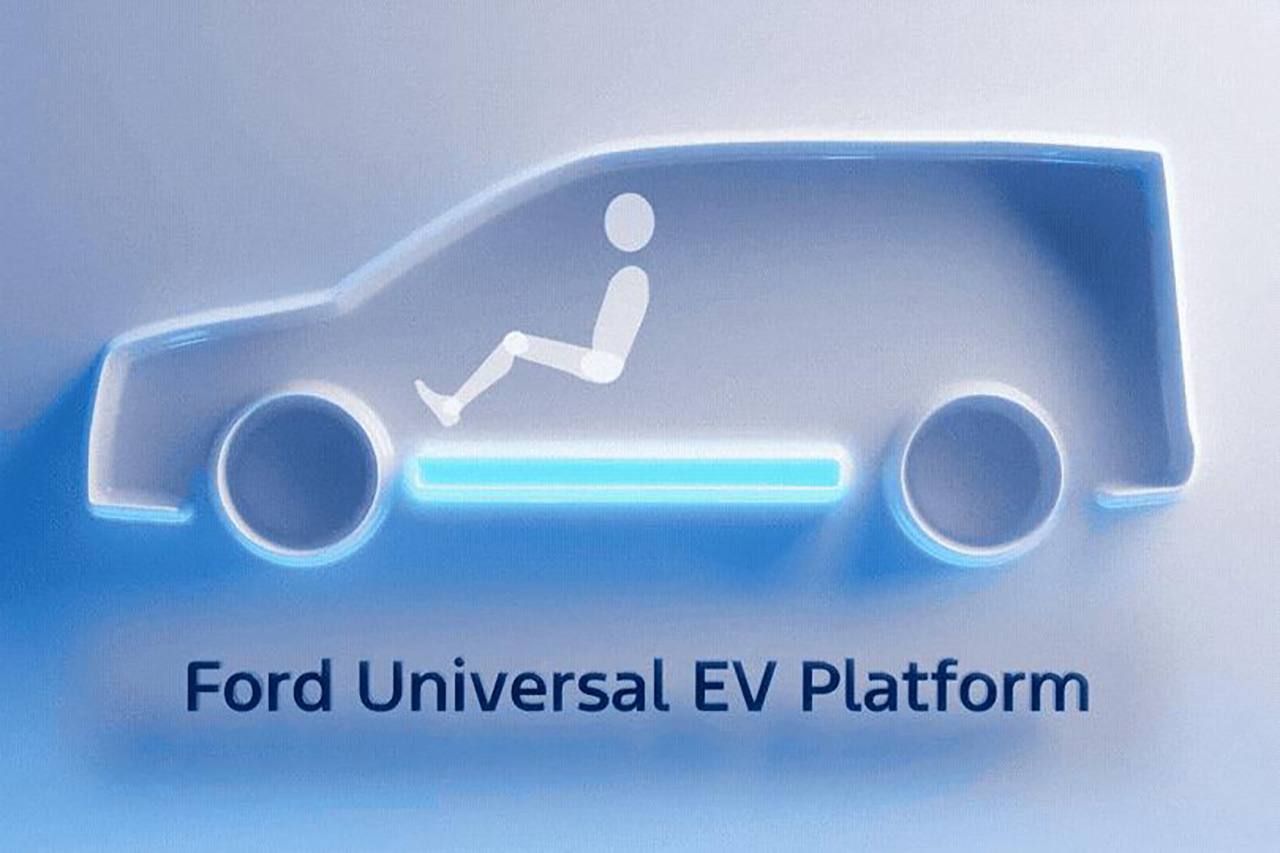
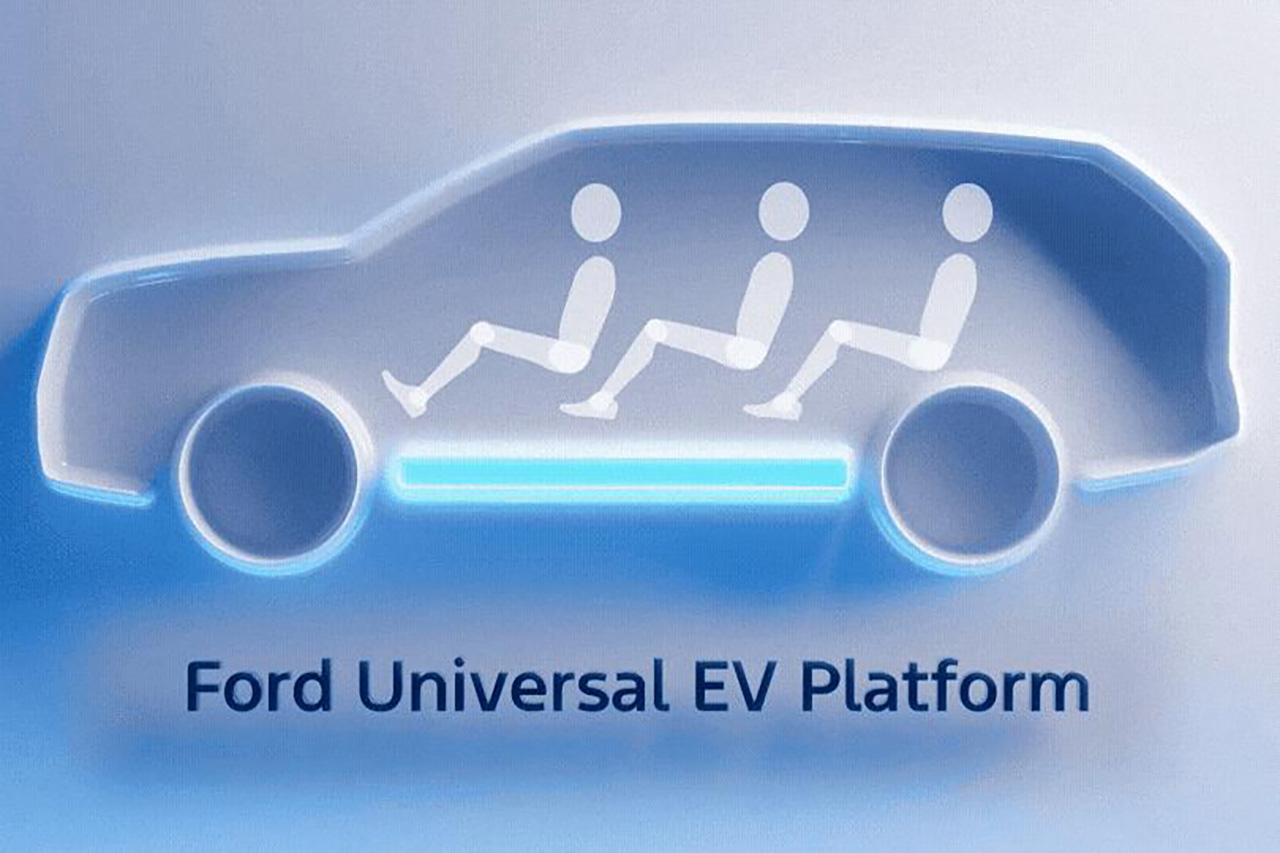
The platform uses U.S.-built prismatic lithium iron phosphate (LFP) batteries, integrated as both a structural sub-assembly and the vehicle’s floor, to achieve a low center of gravity, a quiet cabin, and a spacious interior. It supports a wide variety of vehicle types, from pickups and vans to MPVs and two- or three-row SUVs. Ford aims to make these vehicles affordable for families, highly efficient, customizable, fun to drive, and continuously upgradable via over-the-air (OTA) updates.
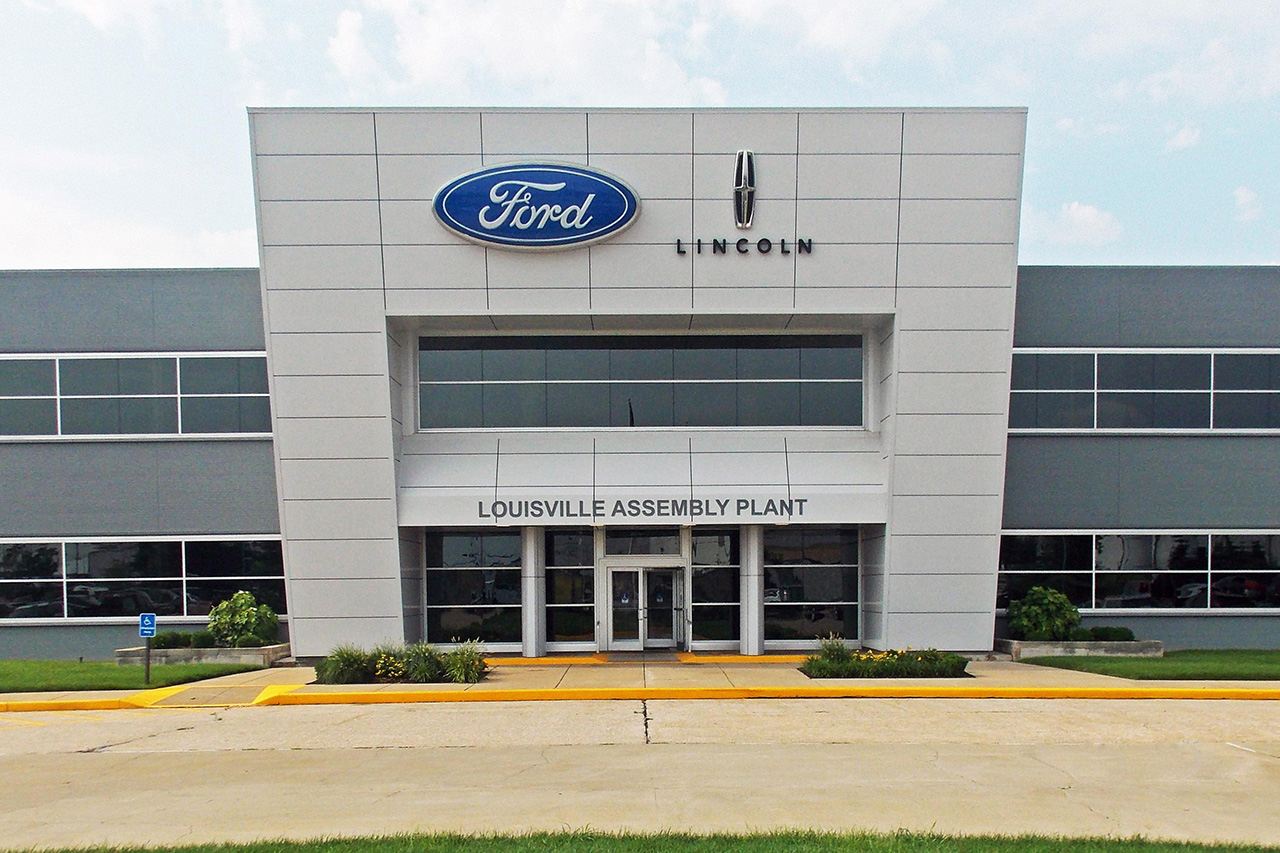
Production will take place at the upgraded Louisville, Kentucky plant, with engineering handled by a “skunkworks” team in California. Ford will also implement its new Ford Universal EV Production System, which replaces the traditional long assembly line with an “assembly tree” — three major sub-assemblies built in parallel before being joined together. This approach reduces parts count by 20 percent, cuts fasteners by 25 percent, shortens the wiring harness by 1.3 km, and reduces weight by 10 kg compared to the Mustang Mach-E. It also uses large single-piece aluminum castings in place of multiple smaller components, enabling assembly to be up to 40 percent faster than the outgoing Ford Escape and Lincoln Corsair, which will be discontinued to make way for the new EVs, while improving worker ergonomics.
The project represents a total investment of US$5 billion — US$2 billion for the Louisville plant and US$3 billion for BlueOval Battery Park Michigan — expected to secure 3,900 jobs. Ford President and CEO Jim Farley stated that the initiative had to be strong, sustainable, and profitable from day one, achieved by empowering a small, independent team outside Detroit, reinventing the assembly process, and becoming the first automaker to produce prismatic LFP batteries in the United States.

Source: CarExpert